Our mission is to help computational modelers develop, document, and share their computational models in accordance with community standards and good open science and software engineering practices. Model authors can publish their model source code in the Computational Model Library with narrative documentation as well as metadata that supports open science and emerging norms that facilitate software citation, computational reproducibility / frictionless reuse, and interoperability. Model authors can also request private peer review of their computational models. Models that pass peer review receive a DOI once published.
All users of models published in the library must cite model authors when they use and benefit from their code.
Please check out our model publishing tutorial and feel free to contact us if you have any questions or concerns about publishing your model(s) in the Computational Model Library.
Displaying 10 of 295 results for "Jieun Seo" clear search
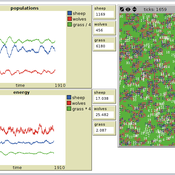
Peer reviewed PPHPC - Predator-Prey for High-Performance Computing
Nuno Fachada | Published Saturday, August 08, 2015 | Last modified Wednesday, November 25, 2015PPHPC is a conceptual model for studying and evaluating implementation strategies for spatial agent-based models (SABMs). It is a realization of a predator-prey dynamic system, and captures important SABMs characteristics.

Simulation of Self-enforcing Agreement in Cooperative Teams
Hang Xiong | Published Friday, April 01, 2016This is an agent-based model of the implementation of the self-enforcing agreement in cooperative teams.
Peer reviewed ABM to create populations with realistic Big Five Personality Trait Expressions
Michael Vogrin | Published Tuesday, May 30, 2023This model aims at creating agent populations that have “personalities”, as described by the Big Five Model of Personality. The expression of the Big Five in the agent population has the following properties, so that they resemble real life populations as closely as possible:
-The population mean of each trait is 0.5 on a scale from 0 to 1.
-The population-wide distribution of each trait approximates a normal distribution.
-The intercorrelations of the Big Five are close to those observed in the Literature.
The literature used to fit the model was a publication by Dimitri van der Linden, Jan te Nijenhuis, and Arnold B. Bakker:
…
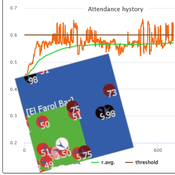
Peer reviewed Flibs’NFarol: Self-Organized Efficiency and Fairness Emergence in an Evolutive Game
Cosimo Leuci | Published Thursday, October 12, 2023According to the philosopher of science K. Popper “All life is problem solving”. Genetic algorithms aim to leverage Darwinian selection, a fundamental mechanism of biological evolution, so as to tackle various engineering challenges.
Flibs’NFarol is an Agent Based Model that embodies a genetic algorithm applied to the inherently ill-defined “El Farol Bar” problem. Within this context, a group of agents operates under bounded rationality conditions, giving rise to processes of self-organization involving, in the first place, efficiency in the exploitation of available resources. Over time, the attention of scholars has shifted to equity in resource distribution, as well. Nowadays, the problem is recognized as paradigmatic within studies of complex evolutionary systems.
Flibs’NFarol provides a platform to explore and evaluate factors influencing self-organized efficiency and fairness. The model represents agents as finite automata, known as “flibs,” and offers flexibility in modifying the number of internal flibs states, which directly affects their behaviour patterns and, ultimately, the diversity within populations and the complexity of the system.
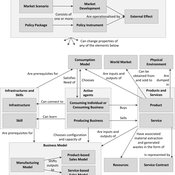
Generic servicising model (SPREE project)
Igor Nikolic Reinier Van Der Veen Kasper H Kisjes | Published Wednesday, August 26, 2015 | Last modified Wednesday, September 28, 2016This generic agent-based model allows the user to simulate and explore the influence of servicising policies on the uptake of servicising and on economic, environmental and social effects, notably absolute decoupling.
Agent-based model for centralized student admission process
Connie Wang Shu-Heng Chen Bin-Tzong Chi | Published Wednesday, November 04, 2015 | Last modified Wednesday, March 06, 2019This model is to match students and schools using real-world student admission mechanisms. The mechanisms in this model are serial dictatorship, deferred acceptance, the Boston mechanism, Chinese Parallel, and the Taipei mechanism.
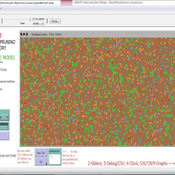
04 TpLab V2.08 – Teleological Pruning Laboratory
Garvin Boyle | Published Saturday, April 15, 2017Our societal belief systems are pruned by evolution, informing our unsustainable economies. This is one of a series of models exploring the dynamics of sustainable economics – PSoup, ModEco, EiLab, OamLab, MppLab, TpLab, CmLab.
Modeling a Victim-Centered Approach for Detection of Human Trafficking Victims within Migration Flows
Kyle Ballard Brant M Horio | Published Saturday, September 23, 2017The model employs an agent-based model for exploring the victim-centered approach to identifying human trafficking and the approach’s effectiveness in an abstract representation of migrant flows.
Viticulture development in emerging markets: Małopolska region
Marcin Czupryna Bogumił Kamiński Paweł Oleksy Piotr Przybek | Published Tuesday, November 28, 2017 | Last modified Saturday, June 16, 2018Model explains both the final state and the dynamics of the development process of the wine sector in the Małopolska region in Poland. Model admits heterogeneous agents (regular farms,large and small vineyards).
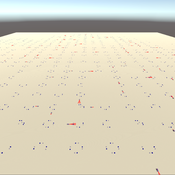
3D Urban Traffic Simulator (ABM) in Unity
Daniel Birks Sedar Olmez Obi Thompson Sargoni Alison Heppenstall Annabel Whipp Ed Manley | Published Friday, January 22, 2021 | Last modified Monday, March 22, 2021The Urban Traffic Simulator is an agent-based model developed in the Unity platform. The model allows the user to simulate several autonomous vehicles (AVs) and tune granular parameters such as vehicle downforce, adherence to speed limits, top speed in mph and mass. The model allows researchers to tune these parameters, run the simulator for a given period and export data from the model for analysis (an example is provided in Jupyter Notebook).
The data the model is currently able to output are the following:
…
Displaying 10 of 295 results for "Jieun Seo" clear search