Our mission is to help computational modelers develop, document, and share their computational models in accordance with community standards and good open science and software engineering practices. Model authors can publish their model source code in the Computational Model Library with narrative documentation as well as metadata that supports open science and emerging norms that facilitate software citation, computational reproducibility / frictionless reuse, and interoperability. Model authors can also request private peer review of their computational models. Models that pass peer review receive a DOI once published.
All users of models published in the library must cite model authors when they use and benefit from their code.
Please check out our model publishing tutorial and feel free to contact us if you have any questions or concerns about publishing your model(s) in the Computational Model Library.
Displaying 10 of 1143 results for "Sjoukje A Osinga" clear search
Managing networked landscapes: conservation in fragmented, regionally connected world
Jacopo A. Baggio Michael Schoon Sechindra Vallury | Published Monday, December 09, 2019Exploring how learning and social-ecological networks influence management choice set and their ability to increase the likelihood of species coexistence (i.e. biodiversity) on a fragmented landscape controlled by different managers.
A preliminary extension of the Hemelrijk 1996 model of reciprocal behavior to include feeding
Sean Barton | Published Monday, December 13, 2010 | Last modified Saturday, April 27, 2013A more complete description of the model can be found in Appendix I as an ODD protocol. This model is an expansion of the Hemelrijk (1996) that was expanded to include a simple food seeking behavior.
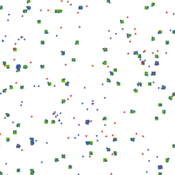
Walk Away in groups
Athena Aktipis | Published Thursday, March 17, 2016This NetLogo model implements the Walk Away strategy in a spatial public goods game, where individuals have the ability to leave groups with insufficient levels of cooperation.
Construction and Demolition model to track material flows and embodied carbon
Jonathan Edgardo Cohen | Published Monday, September 30, 2024Reusing existing material stocks in developed built environments can significantly reduce the environmental footprint of the construction and demolition sector. However, material reuse in urban areas presents technical, temporal, and geographical challenges. Although a better understanding of spatial and temporal changes in material stocks could improve city resource management, limited scientific contributions have addressed this challenge.
This study details the steps followed in developing a spatially explicit rule-based simulation of materials stock. The simulation provides a proof of concept by incorporating the spatial and temporal dimensions of construction and demolition activities to analyse how various urban parameters determine material flows and embodied carbon in urban areas. The model explores the effects of 1) re-using recycled materials, 2) demolitions, 3) renovations and 4) various building typologies.
To showcase the model’s capabilities, the residential building stock of Gothenburg City is used as a case study, and eight building materials are tracked. Environmental impacts (A1-A3) are calculated with embodied carbon factors. The main parameters are explored in a baseline scenario. Then, a second scenario focuses on a hypothetical policy that promotes improvements in building energy performance.
The simulation can be expanded to include more materials and built environment assets and allows for future explorations on, for example, the role of logistics, the implementation of recycling or reuse stations, and, in general, supporting sustainable and circular strategies from the construction sector.
Proof of principle for a self-governing prediction and forecasting reward algorithm: Modeling consensus of a group of experts in adversarial collaboration.
Jose Osvaldo Gonzalez Hernandez Ted C. Rogers Jonathan Marino Brandon Velasco | Published Sunday, May 14, 2023Package for simulating the behavior of experts in a scientific-forecasting competition, where the outcome of experiments itself depends on expert consensus. We pay special attention to the interplay between expert bias and trust in the reward algorithm. The package allows the user to reproduce results presented in arXiv:2305.04814, as well as testing of other different scenarios.
ABMIND: An Empirically Informed Agent-Based Model of Psychological Distance and Environmental Protection Behavior
Wenhan Feng | Published Saturday, June 13, 2026ABMIND, the Agent-Based Model of Individual Psychological Distance, is a modeling framework developed to examine how psychological distance influences environmental protection behavior in coastal farming communities in southern China. Using household survey data and empirically estimated behavioral pathways, the model represents how uncertainty shapes four dimensions of psychological distance, namely temporal, spatial, social and hypothetical distance, and how these dimensions guide protection and degradation decisions. Agents include households, government actors and mangrove ecosystem patches, connected through social networks and ecological feedbacks that affect learning, expectations and perceived benefits. Policy interventions such as rewards, penalties and publicity guidance efforts work by modifying uncertainty and psychological distance rather than directly controlling behavior. ABMIND is implemented as a spatially explicit model following the ODD protocol, and a concise user guide is provided. In developing ABMIND we introduce a structured validation workflow that links statistical mediation analysis with simulation-based diagnostics, allowing empirical cognitive mechanisms to be systematically embedded and tested within the ABM. This integrated approach strengthens the credibility of psychological-mechanism models and supports their use in policy evaluation. The framework offers a methodological platform for integrating cognitive mechanisms into agent-based environmental behavior modeling and for evaluating policy strategies that support ecosystem protection.
Model paper:
ABMIND: An empirically informed agent-based model of psychological distance and environmental protection behaviour
Ecological Modelling
https://doi.org/10.1016/j.ecolmodel.2026.111700
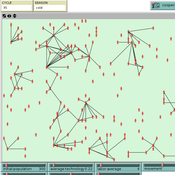
PSMED - Patagonia Simple Model of Ethnic Differentiation
Xavier Vilà Joan A Barceló J A Cuesta Florencia Del Castillo Ricardo Del Olmo José M Galán Laura Mameli Francisco J Miguel David Poza José I Santos | Published Tuesday, December 10, 2013Patagonia PSMED is an agent-based model designed to study a simple case of Evolution of Ethnic Differentiation. It replicates how can hunter-gatherer societies evolve and built cultural identities as a consequence of the way they interacted.
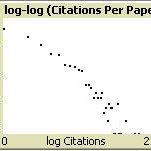
Citation Agents: A model of collective learning through scientific publication
Christopher Watts | Published Friday, July 31, 2015Simulates the construction of scientific journal publications, including authors, references, contents and peer review. Also simulates collective learning on a fitness landscape. Described in: Watts, Christopher & Nigel Gilbert (forthcoming) “Does cumulative advantage affect collective learning in science? An agent-based simulation”, Scientometrics.
CITMOD A Tax-Benefit Modeling System for the average citizen
Philip Truscott | Published Monday, August 15, 2011 | Last modified Saturday, April 27, 2013Must tax-benefit policy making be limited to the ‘experts’?
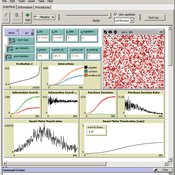
A consumer-demand simulation for Smart Metering tariffs (Innovation Diffusion)
Martin Rixin | Published Thursday, August 18, 2011 | Last modified Saturday, April 27, 2013An Agent-based model simulates consumer demand for Smart Metering tariffs. It utilizes the Bass Diffusion Model and Rogers´s adopter categories. Integration of empirical census microdata enables a validated socio-economic background for each consumer.
Displaying 10 of 1143 results for "Sjoukje A Osinga" clear search