Our mission is to help computational modelers develop, document, and share their computational models in accordance with community standards and good open science and software engineering practices. Model authors can publish their model source code in the Computational Model Library with narrative documentation as well as metadata that supports open science and emerging norms that facilitate software citation, computational reproducibility / frictionless reuse, and interoperability. Model authors can also request private peer review of their computational models. Models that pass peer review receive a DOI once published.
All users of models published in the library must cite model authors when they use and benefit from their code.
Please check out our model publishing tutorial and feel free to contact us if you have any questions or concerns about publishing your model(s) in the Computational Model Library.
Displaying 10 of 281 results for "Eckhard Auch" clear search
A simple Multi-Agent System of the Tragedy Of the Commons (MASTOC-s)
Julia Schindler | Published Friday, June 29, 2012 | Last modified Saturday, April 27, 2013This is a simple model replicating Hardin’s Tragedy of the Commons using reactive agents that have psychological behavioral and social preferences.
Simulation model for compliance behaviour
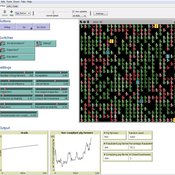
Esther Van Asselt Sjoukje A Osinga | Published Friday, October 03, 2014 | Last modified Tuesday, December 08, 2015This model can be used to optimize intervention strategies for inspection services.
Opinion Dynamics with various confidence distributions
Jonas Lindblad | Published Friday, September 28, 2018Project for the course “Introduction to Agent-Based Modeling”.
The NetLogo model implements an Opinion Dynamics model with different confidence distributions, inspired by the Bounded Confidence model presented by Hegselmann and Krause in 2002. Hegselmann and Krause used a model with uniform distribution of confidence, but one could imagine agents that are more confident in their own opinions than others. Confidence with triangular, semi-circular, and Gaussian distributions are implemented. Moreover, network structure is optional and can be taken into account in the agent’s confidence such that agents assign less confidence the further away from them other agents are.
Fertility Tradeoffs
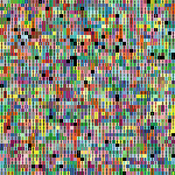
Kristin Crouse | Published Tuesday, November 05, 2019 | Last modified Wednesday, March 25, 2026Fertility Tradeoffs is an agent-based model that examines how parental investment strategies evolve under density-dependent conditions. Humans occupy territories that compete for limited space, and reproduction requires both resources and available territory. Individuals inherit investment strategies that determine how much time and resources are required to raise a child, creating a tradeoff between number of children and investment per child. As space fills, territory costs increase and population growth slows, producing logistic-like dynamics. By manipulating child mortality and resource availability, the model demonstrates how environmental conditions shape both population outcomes and the evolution of reproductive strategies.
Individual-based model to "Intraspecific trait variation in personality‐related movement behavior promotes coexistence" (Milles et al., 2020)
Alexander Milles | Published Monday, June 22, 2020The community consequences of intra-specific trait variation (ITV) are a current topic in ecological research. The effects of ITV on species coexistence have, yet, not sufficiently been understood. With this individual-based model we analyzed the effect of intra-specific variation in movement by mimicking variation found in ground-dwelling rodents and analyzing how such variation affects inter-specific differences in competitive ability (i.e. foraging efficiency) and temporary coexistence. The movement algorithm and behavioral plasticity was adapted from existing algorithms and current ecological literature. As a measure for temporary coexistence, we analyzed the time until one of the species went extinct.
Hollywood Underrepresentation Simulated Causes
Carmen Iasiello | Published Sunday, November 26, 2023Presented here is a socioeconomic agent-based model (ABM) to examine the Hollywood labor system as a network within a simulated movie labor market based on preferential attachment and compare the findings with 50 co-production ego networks during the 2015 movie year. Using the ABM, I test the role slight individual preference for racial and ethnic similarity within one’s own network at the microlevel and find that it is insufficient to explain the phenomena of racial and ethnic underrepresentation at the macrolevel. The ABM also includes the ability to test alternative explanations, such as overt opportunity loss as a possible explanation.
Transfer of Development Rights (TDR) Simulation for Compact Urban Growth in Dublin: An Agent-Based Model in NetLogo
ajithvyas | Published Wednesday, May 14, 2025This agent-based model simulates the implementation of a Transfer of Development Rights (TDR) mechanism in a stylized urban environment inspired by Dublin. It explores how developer agents interact with land parcels under spatial zoning, conservation protections, and incentive-based policy rules. The model captures emergent outcomes such as compact growth, green and heritage zone preservation, and public cost-efficiency. Built in NetLogo, the model enables experimentation with variable FSI bonuses, developer behavior, and spatial alignment of sending/receiving zones. It is intended as a policy sandbox to test market-aligned planning tools under behavioral and spatial uncertainty.
InnovationGame
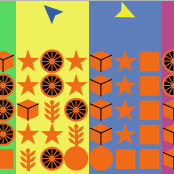
Madeline Tyson | Published Thursday, August 24, 2017This model includes an innovation search environment. Agents search and can share their findings. It’s implemented in Netlogo-Hubnet & a parallel Netlogo model. This allows for validation of search strategies against experimental findings.
FLOSSSim: An Agent-Based Model of the Free/Libre Open Source Software (FLOSS) Development Process
Nicholas Radtke | Published Saturday, December 31, 2011 | Last modified Saturday, April 27, 2013An agent-based model of the Free/Libre Open Source Software (FLOSS) development process designed around agents selecting FLOSS projects to contribute to and/or download.
Peer reviewed An Agent-Based Model of Status Construction in Task Focused Groups
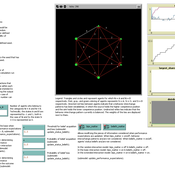
Andreas Flache Rafael Wittek André Grow | Published Sunday, May 18, 2014 | Last modified Tuesday, June 16, 2015The model simulates interactions in small, task focused groups that might lead to the emergence of status beliefs among group members.
Displaying 10 of 281 results for "Eckhard Auch" clear search